What is
Machines moved by an animal. The sinia raises water from a shallow well to water the garden. The molí de sang grinds grain (or olive) with the same animal force. «De sang» = blood: animal, not wind or water.
##Com works
- Sínia: a mule or a donkey spins in a circle. A gear moves a vertical wheel with a chain of cadufos (arcaduces) that go down empty and come up full: the principle of the hydraulic rosari. The water falls into a channel and from there to the safareig or the furrows.
- Yield: about 4 m³/hour, enough to irrigate 1 hectare (Mayol, Mètode 118, citing Rosselló Verger).
- A constant animal and person were needed. Blinders were put on the animal so it wouldn't get dizzy.
- Molí de sang: useful where there is no regular wind or current. Less performance, but simple mechanism and available energy: it was the most widespread type.
Elements and vocabulary
- Sínia, Cadufo, Roda, Sènia (variant), Pou, Safareig, Síquia
- Sínia Valenciana: iron model that replaced the wooden ones a century ago
- molí de sang, mola, tafona (oil mill, also animal traction)
History
- Word documented in Catalan since 1054, from the Arabic sāniya (Viquipèdia). In the Maghreb, saniya (Mayol).
- Ramon Llull already mentions it in the 20th century. XIII (Mayol).
- The king of Mallorca had a sinia in the garden of his castle in Perpinyà in 1340 (DECAT).
- A century ago, many wooden and deciduous sinies became iron (valencianes).
- In the 1950s, windmills had already replaced almost all the windmills in l'Horta de Palma.
- Molins de sang: in the 19th century. In the 18th century there were 120 in Llucmajor alone (Rosselló, via Viquipèdia). Many possessions had theirs.
On veure'n
- Remains in farms in Pla and in l'Horta de Palma (inventory to be done; to verify visitable examples).
- Museu de Mallorca – Etnològica Section (Wall): collection of rural life (check if it exhibits information; check). Tab .
Stat
Almost completely out of use. There are pits with their animal passage ring and loose pieces. Risk: they disappear when urbanized or become garden ornaments without explanation.
Why is it design
Machine on the scale of the animal and the garden: a person, a mule, a hectare. Lesson: appropriate technology, measured according to the available resource. It is proximity design .
Avui architecture
No architectural reinterpretation identified. Living link: the Associació Tracció Animal recovers implements and draft animals (Última Hora, 2022), although focused on the plow.
For the project
- Atlas: animation of the hydraulic rosari (falls that go up and down).
- Participatory inventory of wells with sinia in a municipality.
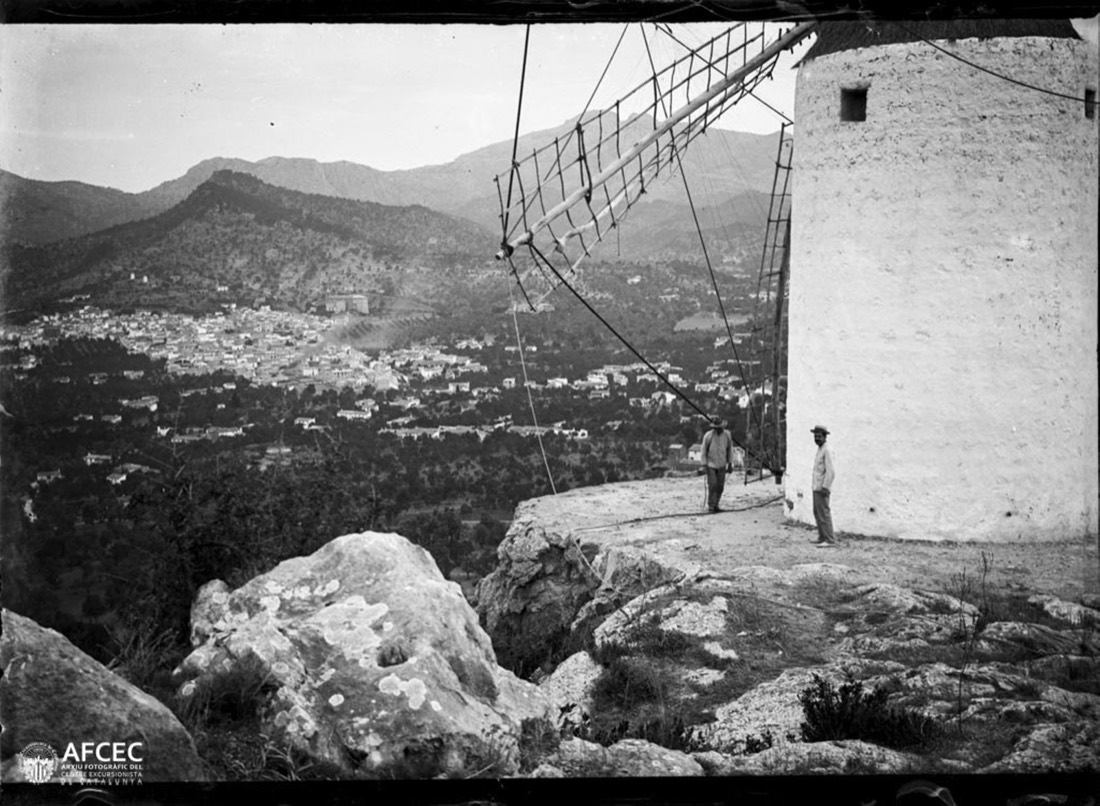
- Link with windmills , which replaced them.
Frequently asked questions
What is Sínies and molins de sang (animal-driven wheels and mills)?
Machines moved by an animal. The sinia raises water from a shallow well to water the garden. The molí de sang grinds grain (or olive) with the same animal…
Sources
- metode.es/wp-content/uploads/2023/09/118ES-6-13-molinos-mallorca.pdf
- ca.wikipedia.org/wiki/Sínia
- decat.iec.cat/documents/VII/932.pdf
- ca.wikipedia.org/wiki/Molí_de_sang
- ca.wikipedia.org/wiki/Possessió
Working text from the Disseny Indígena knowledge base, machine-translated from Spanish.