> Note: in Mallorca they do not say albarda or aubarda, but rather aubardà (DCVB). The slug remains.
What is
The garniments: the equipment that unites the animal to its work.
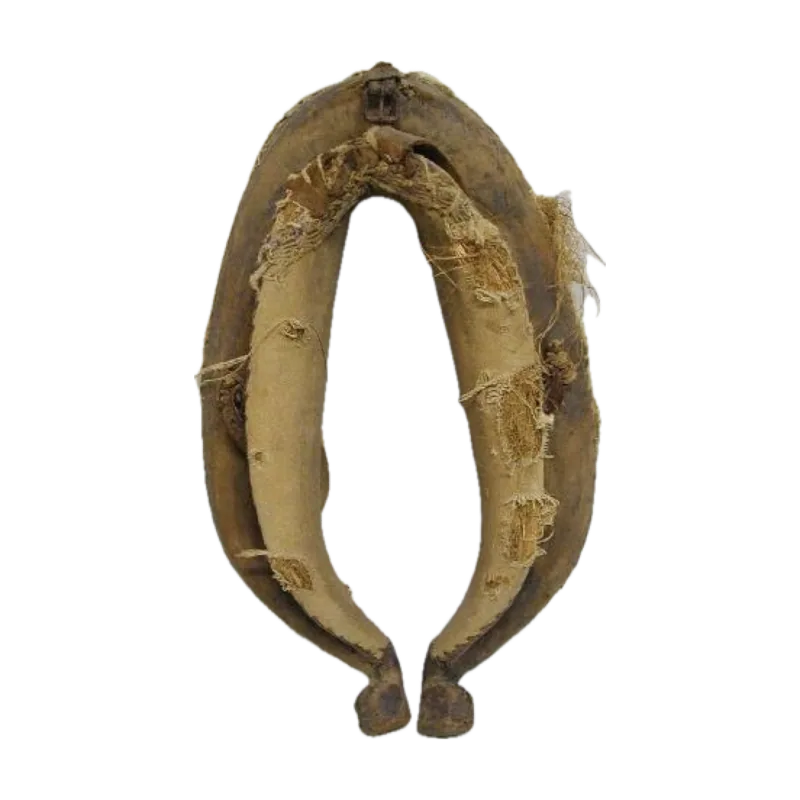
- Collera: leather collar filled with straw or horsehair to pull the cart, plow or batre cart (DCVB, includes Palma and Manacor).
- Bast: cargo chair with projecting pommels, to carry weight on the back.
- Aubardà: the Mallorcan rig equivalent to the packsaddle (exact shape: to be verified).
How is
Bast (DCVB):
- Siti / llit: skin base filled with straw or wool, so as not to hurt the animal.
- Arches: made of wood.
- Cingla: wide strap under the belly.
- Pitral: hemp or leather strap in front of the chest; prevents the load from rolling back uphill.
- Tafarra / rabasta: curved piece of wood behind the haunches; prevents it from slipping downhill.
Collar:
- Leather ring filled with straw or horsehair, fastened with two wooden ribs (DCVB, collar).
- Collar (Mall.): two curved sticks articulated, like a compass, around the llaurar coixí (DCVB).
- Skeleton necklace: flat hoop, usually made of lledoner (hackberry), from which hangs the sheep and goat skeleton (Mall.).
How is fa
- Job of the baster / packsaddle: he made packsaddles, saddles, basts and harnesses; documented since the s. XV (Encyclopedia). In Catalonia albarder, corretjaire, baster and garnimenter specialized.
- The Government's Cercador d'artesans maintains the baster category; active workshops in Mallorca: (to verify).
- Materials: leather, straw, horsehair, wool, hemp, wood.
Com s'usa
- Collera: pulling the cart , the plow , the batre cart and the sinia .
- Bast: carry arganells, beaces, sàrries or firewood on your back along mountain paths.
Vocabulary
- guarniments: trappings.
- collera: draft collar.
- coixí de llaurar: neck cushion for plowing.
- bast: cargo chair.
- arçó: wooden pommel.
- cingla: cinch.
- pitral: petral.
- tafarra / rabasta: ataharre.
- aubardà: Mallorcan rig (= packsaddle).
- baster / albarder: craftsman of basts and packsaddles.
- «Esser com els ases d'Artà, que en veure es bast ja suen»: be very vague (Mall.).
- «Treure's es bast a coces»: to get rid of something annoying by force (Mall.).
History
- 1288: "bast whip load" in a document (DCVB).
- 15th century: the profession of saddler/baster already exists (Enciclopèdia).
- 20th century: mechanization sinks the trade; It survives through festivals and horse riding (Catalan data; in Mallorca, to be verified).
On veure'n
- Museum of Mallorca, ethnological section (Wall) .
- Beneïdes de Sant Antoni (harnessed animals).
Why is it design
- Animal ergonomics: soft padding, anchors in front and behind depending on the slope.
- Very precise load distribution, without metal.
- Local and repairable materials: straw, leather, wood.
For the project
- Search the Cercador d'artesans for any active basters in Mallorca.
- Piece: the logic of the bast (pitral + tafarra) applied to a contemporary backpack or carry bag.
Frequently asked questions
What is Harness: collera, bast and aubarda?
> Note: in Mallorca they do not say albarda or aubarda, but rather aubardà (DCVB). The slug remains.
What are the traditional words for Harness: collera, bast and aubarda?
Some words: arçó, aubardà, bast, baster / albarder, cingla, coixí de llaurar, collera, guarniments.
Sources
- dcvb.iec.cat/results.asp?Word=collera
- dcvb.iec.cat/results.asp?Word=collar
- dcvb.iec.cat/results.asp?Word=bast
- dcvb.iec.cat/results.asp?Word=albarda
- enciclopedia.cat/gran-enciclopedia-catalana/albarder
- caib.es/siciefront/artesania/index.jsp?idioma=ct
Working text from the Disseny Indígena knowledge base, machine-translated from Spanish.