What is
- Plow: instrument to remove and turn the earth before sowing. One piece carries the rella (grid) and another, the spear to which the animal is hitched.
- Jou: yoke; It keeps the two animals of a parell that pull the plow or cart together and balanced.
How is
Jou mallorquí (DCVB):
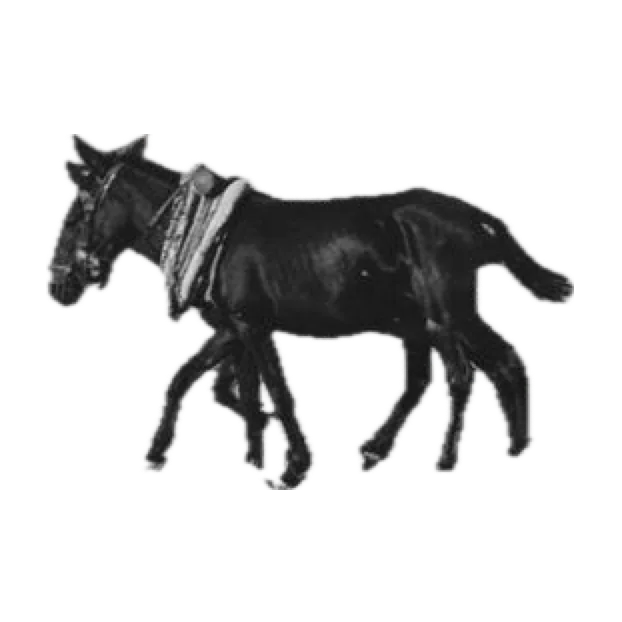
- It is jou de camelles: two sticks (camelles) press on each side the coixí that protects the animal's neck, joined by a rope (juntera). It is the only type used in the Balearic Islands.
- Mallorcan feature: great curvature of the body of the yoke. It is required to do it in three pieces: the two caps de jou (extremes) and the llombrígol (center).
- Jou d'una bístia (Mall.): very curved piece in an inverted V, with two camels and handles, for a single animal.
Majorcan plowing (DCVB):
- Basic parts: rella (grid), dental (holds the fence), esteva (handle) with its handle, and the perxa/espigó where the animals pull.
- In Mallorca and Menorca, one of the three main parts is made of two added pieces.
- Arada amb braços (Manacor), arada de gàbia (Santa Margalida), arada de foc (Mancor): single-animal plows.
- Vinya llaurar plow (Mall.): with the arms deviated from the axis, to plow next to the vines without the animal rubbing them.
- Plowing (Manacor): with a wooden box, to open the garden ditches.
- In the iron plow, the trinxets are the two side blades that cut the grass (Manacor). See trinxet .
How is fa
- Wood: fuster (in Menorca, the specific job of arader). Iron grate: ferrer ( ferro forjat ).
- Coixí and collar: baster. See garnishes .
Com s'usa
Ways to carry the plow (DCVB, Mall.):
- flat plowing: very horizontal share, little entry.
- toe plow / carnissera: very nailed share.
- full plowing: plowing hard, the two edges remove new soil.
- fer camada: unequal furrows, one wide and one narrow.
- Season: autumn (sowing) and vine and almond tree work (please check calendar).
Vocabulary
- arada: plow.
- rella: reja.
- dental: piece that holds the fence.
- esteva: mancera.
- orelleres: ear flaps that open the furrow.
- jou: yoke.
- caps de jou / llombrígol: extremes / center of the Mallorcan jou.
- camelles: sticks that hold the coixí.
- juntera: rope that joins the camels.
- parell: pair of draft animals.
- «Passar l'arada davant els bous»: start the house from the roof (Mall., Men.).
- «Arada llarga i llaurador granat»: Mallorcan saying.
History
- 13th century: Llull: "the ferre in the aradre is more valuable than the aur in the box."
- 1395-1409: inventories mention "aradre ab sa rella".
- First quarter of the s. XX: Alcover and Moll collect the form and nomenclature of the yokes of the entire linguistic domain, "a temps" before they disappear.
- Replacement with the iron plow and the tractor: (dates in Mallorca, to be verified).
- The jou is still alive in architecture: the horizontal beams of Sínies and molins de vent are also called jou (Mall.).
On veure'n
- Museum of Mallorca, ethnological section (Wall) .
- Estates and estates .
Why is it design
- Resistance curve: the three-piece curved jou distributes the effort and is repaired in parts.
- Crop variants: vineyard plow, ditch plow, animal plow.
- Local wood tool + little iron: minimal metal where it is needed.
For the project
- Technical drawing of a Mallorcan jou (caps de jou + llombrígol) as a graphic piece.
- Question: what current agricultural design inherits the logic of the “llaurar vinya plow”?
Frequently asked questions
What is Jou (yoke) and Mallorcan ploughing?
- Plow: instrument to remove and turn the earth before sowing. One piece carries the rella (grid) and another, the spear to which the animal is hitched.
Who practises Jou (yoke) and Mallorcan ploughing in Mallorca today?
The Balearic Islands Crafts Register lists 1 artisans linked to this craft, in Llucmajor.
What are the traditional words for Jou (yoke) and Mallorcan ploughing?
Some words: arada, camelles, caps de jou / llombrígol, dental, esteva, jou, juntera, orelleres.
Sources
- dcvb.iec.cat/results.asp?Word=jou
- dcvb.iec.cat/results.asp?Word=arada
- dcvb.iec.cat/results.asp?Word=collar
- dcvb.iec.cat/results.asp?Word=trinxet
Working text from the Disseny Indígena knowledge base, machine-translated from Spanish.