What it is and technique
Marès is a sandstone formed by consolidated marine sands (Quaternary). Soft when cut, hardens over time; The quality varies greatly depending on the quarry. The trenchers ripped out blocks in the quarry; the stonecutters carved them. The Santanyí stone, harder and golden, is the noble stone.
Short story
Material of almost all the historical architecture of the island, from the Seu to the town house. Medieval coastal quarries: Cala Sa Nau, Cap Blanc, Santanyí. In 1406, King Martí I requested a thousand pieces of stone from Santanyí for his palace in Barcelona. Concrete and brick displaced the trade in the 20th century.
Chronology:
- Prehistory and Roman times: use of local sandstones (to verify specific cases).
- 13th-15th centuries: the Seu and the Llotja of Palma use stone from the island; La Llotja is the work of Guillem Sagrera (1420-1452) (to verify the exact quarry).
- 1406: Martí I requests stone from Santanyí for his palace in Barcelona.
- 20th century: concrete and brick displace the marès in ordinary work.
- 1971-1973: Utzon builds Can Lis with local marès (see `../diseño-contemporaneo/can-lis-utzon.md`).
- 2010: Sánchez-Cuenca, El Marès.
- 2021: Catalina Salvà thesis on quarries as a landscape.
Where and who today
- Active extraction near s'Alqueria Blanca (Santanyí). The historic "Pedreres Grans" are in Es Dèume.
- Assets with name: Sebastian Caldentey SA (Santanyí, Labra); Sa Pedrera (Santanyí) and Can Picó (Felanitx) farms. See Xifres.
State
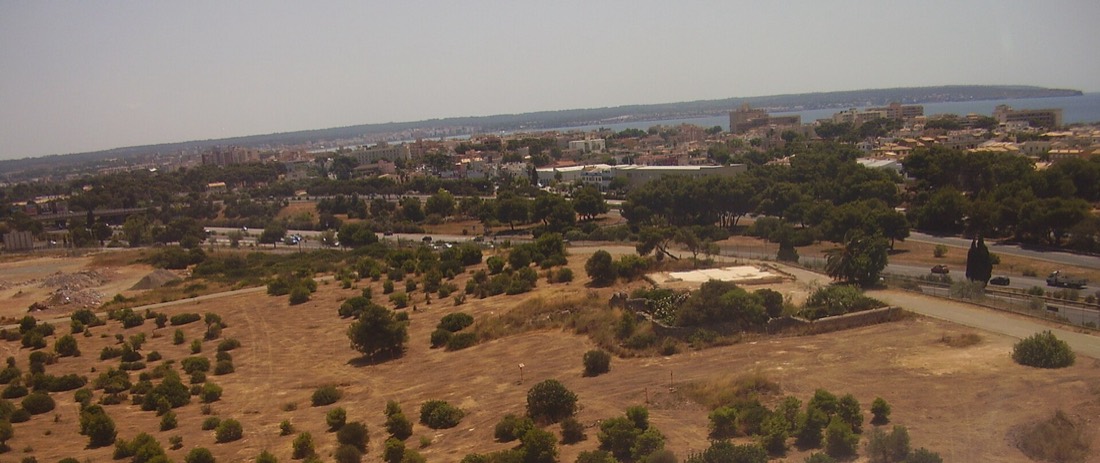
Alive but reduced; The abandoned quarry sites are also landscape. Thesis of Catalina Salvà Matas (2021): the Marès quarries are an identifying trace of the landscape and the restoration plans that fill them in can erase them.
Contemporary Updates
- Outside of Mallorca, Lithica (Menorca) converts a sand quarry into an art space: a direct reference. lithica
- Architectural references with marès (Utzon in Can Lis) see `../referentes/`.
- Bibliography: Ramon Sánchez-Cuenca, El Marès (2010).
Process step by step
In the quarry (trencador):
1. Clean the top layer and choose the good stone bench.
2. Mark the grid of blocks (cantons) on the ground.
3. Open channels with a saw or pick, by hand (today, with a disc saw).
4. Separate the block at the base with wedges (tascons).
5. Take out, square and stack so that the stone airs and hardens.
In the workshop (stonecutter):
1. Roughing with a knife.
2. Carve with chisel, tallant and buixarda depending on the finish.
3. Moldings, edges and template fittings.
- The Santanyí stone, harder, allows for fine detail (moldings, shields, capitals).
Forms and objects
- Sang: standard marès block; Its measurement modulates entire walls.
- Arch portals (from mig punt, rebaixat) and finestres with lindes and brancals.
- Stairs, sinks (water troughs, sinks), aljub colls and curbs.
- Columns, capitells, cornices and escutches in Santanyí stone.
- Abandoned quarry sites: stepped walls that today are landscape and space (see Lithica).
Vocabulary
- marès: marine calcareous sandstone, soft when cut.
- pedra de Santanyí: hard, golden calcarenite, noble stone.
- pedrera: quarry (open cell or gallery).
- trencador: someone who tears up blocks in the quarry.
- picapedrer: someone who carves stone.
- cantó: standard block.
- escoda: two-edged hammer for working.
- tascó: wedge to separate the block.
- buixarda: point hammer for texturing.
- tallant: cutting tool.
- llinda: jamb.
- pica: stone pile.
- coll d'aljub: cistern curb.
- motllura: molding.
Geography
- Migjorn and Llevant (Llucmajor, Campos, Santanyí, Felanitx): marès banks near the coast. The coastal quarries allowed stone to be loaded by boat.
- Santanyí: hard and golden stone; historic quarry sites in Es Dèume and s'Alqueria Blanca.
- The stone of each area gives color to its towns.
Xifres
- Sa Pedrera (Santanyí): Santanyí stone mining exploitation, mining record no. 2242; restoration and adaptation processed in 2016 and 2017 (BOIB).
- Can Picó (Felanitx): Santanyí stone quarry project (BOIB 2021).
- Active construction company: Sebastian Caldentey SA (Santanyí): portals, columns, stairs, countertops (directory; check if it is extracted).
- Without verified data on the number of active stonecutters.
Why is it design
- Material that breathes: porous, regulates humidity and temperature.
- Module: the song standardizes construction without plans.
- Visible footprint: the quarry is the negative of the city.
- Local material that lost prestige, not quality.
For the project
- Possible piece: furniture or exhibition piece in marès with a stone cutter; tour of abandoned quarry sites for the atlas.
- Contact: Catalina Salvà Matas (author of the thesis); Santanyí quarries.
- Background question: is the abandoned quarry a void or a construction site? Why did a local, soft and breathing material remain as a "poor man's stone"?
Frequently asked questions
What is Marès stone and picapedrers (stonemasons)?
Marès is a sandstone formed by consolidated marine sands (Quaternary). Soft when cut, hardens over time; The quality varies greatly depending on the quarry…
Who practises Marès stone and picapedrers (stonemasons) in Mallorca today?
The Balearic Islands Crafts Register lists 24 artisans linked to this craft, in Campos, Binissalem, Porreres, Palma, Algaida.
What are the traditional words for Marès stone and picapedrers (stonemasons)?
Some words: buixarda, cantó, coll d'aljub, escoda, llinda, marès, motllura, pedra de Santanyí.
Sources
- tesisenred.net/handle/10803/671878?show=full
- decat.iec.cat/documents/VI/366.pdf
- dialnet.unirioja.es/descarga/articulo/2731644.pdf
- idealista.com/ca/news/node/904181
- menorca.info/menorca/local/2019/03/10/1590448/menorca-queda-piedra-mares-por-dem
- intranet.caib.es/eboibfront/pdf/es/2016/4/937274
- intranet.caib.es/eboibfront/pdf/es/2017/61/978571
- intranet.caib.es/eboibfront/pdf/ca/2021/25/1080264
- mallorca.com/ca/directori/empresa/sebastian-caldentey-sa-santanyi
Working text from the Disseny Indígena knowledge base, machine-translated from Spanish.