What is
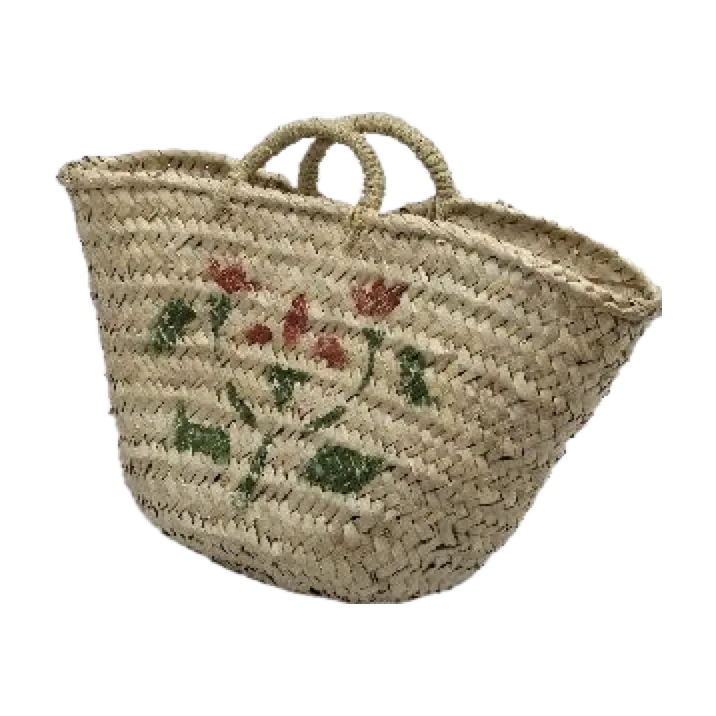
Palm or espart basket with two handles. It is the universal container of the house and the Majorcan countryside: earth, manure, food, shopping. The DCVB defines it as a container "wider in the mouth than in the bottom, almost as high as in the mouth."
How is
- Shape: inverted truncated cone; wide mouth, somewhat narrower base, height almost equal to the mouth.
- Material: in Mallorca, especially palm tree (garballó) sewn in a spiral; also espart.
- Parts: cul (base), paret, voreta (reinforced edge with càrritx core), anses (handles). The sotet loop distributes the load over the entire edge.
- Measurements: variables depending on type; there are no verified standardized measurements. In the past it was measured by capacity: "una senaya de mija quartera" (Mostassaf, cit. DCVB).
How is fa
Braiding the llata (7 or 9 brins for the senalla llata) and spiral sewing with a needle and a brin. Domestic work for women in Artà and Capdepera, purchased by the senallater. Complete process in palm work ; espart and trade in espart and cistellia .
Com s'usa
- It is carried with the two handles together in one hand or carried on the arm.
- Variants by use (DCVB): clotar seal (wide and low, to remove dirt when making holes), farinera seal (high and narrow, receives the flour that falls from the mill).
- Purchase ticket for the market; stonecutter sign for the work.
Vocabulary
- senalla: palm or espart carrycot with two handles.
- senalleta: small sign, for shopping or for a walk.
- senalla de clotar: wide and low, to swallow earth.
- senalla farinera: tall and narrow, to collect flour in the mill.
- senallater: wholesale buyer of palm work.
- barxa: large, elongated transport sign.
- cofa: large cargo carrycot.
- voreta: reinforcing edge with a càrritx core.
History
- 1299: a document prohibits resellers from buying "sàrries ni senayles" (DCVB).
- 13th-14th century: Ramon Llull cites the "sanalla" in which the gardener carries the manure (Fèlix, DCVB).
- 1866-1869: export of palm work by the customs of Palma, Alcúdia and Andratx (BOIB 101/2026).
- 1950s: maximum production due to tourism; signs with colored embroidery.
- 20th century: the plastic senalla copies the shape and displaces the palm one.
- 2026: initiation of the BIC Immaterial de l'obra de palm (BOIB 101/2026).
On veure'n
- Regional Art Museum: collection of tools for working with palm trees.
- Museu de sa Llata, Capdepera castle (schedule to be verified).
- Museum of Mallorca, ethnological section (Wall) .
- For sale: Esparteria Beltran , Ca'n Toni Blancos ; artisans in Ses Madones and Guillem Cassellas .
Why is it design
- One shape, a thousand uses: the same truncated cone is used for soil, bread or shopping; They only change size and proportion.
- Loading ergonomics: two handles that come together in one hand; Wide mouth to fill with a shovel or by hand.
- Local and free material: wild palm, without cultivation or irrigation.
- Repairable: a broken tire turn is re-stitched; not plastic.
For the project
- Piece: reissue of the senalla de clotar or farinera as a contemporary container (firewood, toys, clothing) with artisans from Capdepera.
- Map of senalla typologies by use for the atlas.
- Contact: Associació Art de la Pauma; Museum of sa Llata.
Frequently asked questions
What is Senalla (palm basket)?
Palm or espart basket with two handles. It is the universal container of the house and the Majorcan countryside: earth, manure, food, shopping. The DCVB…
What are the traditional words for Senalla (palm basket)?
Some words: barxa, cofa, senalla, senalla de clotar, senalla farinera, senallater, senalleta, voreta.
Sources
- dcvb.iec.cat/results.asp?Word=senalla
- intranet.caib.es/eboibfront/pdf/ca/2026/101/1226130
- illesbalears.travel/en/mallorca/museum-fundacio-museu-regional-darta
Working text from the Disseny Indígena knowledge base, machine-translated from Spanish.