What it is and technique
Knife for rural and kitchen use: steel blade and olive wood (or antler) handle. Forging or cutting the blade, tempering, sharpening and mounting the handle.
Short story
Tool of the field, slaughter (matances) and kitchen. I have not found a specific documented history of Majorcan cutlery: pending.
Time frame (no specific story published):
- 19th-20th centuries: the field and Matanzas knife was made by village ferrers and sharpened by the traveling grinder (to verify Mallorcan sources).
- Second half of the 20th century: industrial cutlery (Albacete, import) displaces local production.
- Today: Ganivets Campins (Consell) is the only workshop identified.
Where and who today
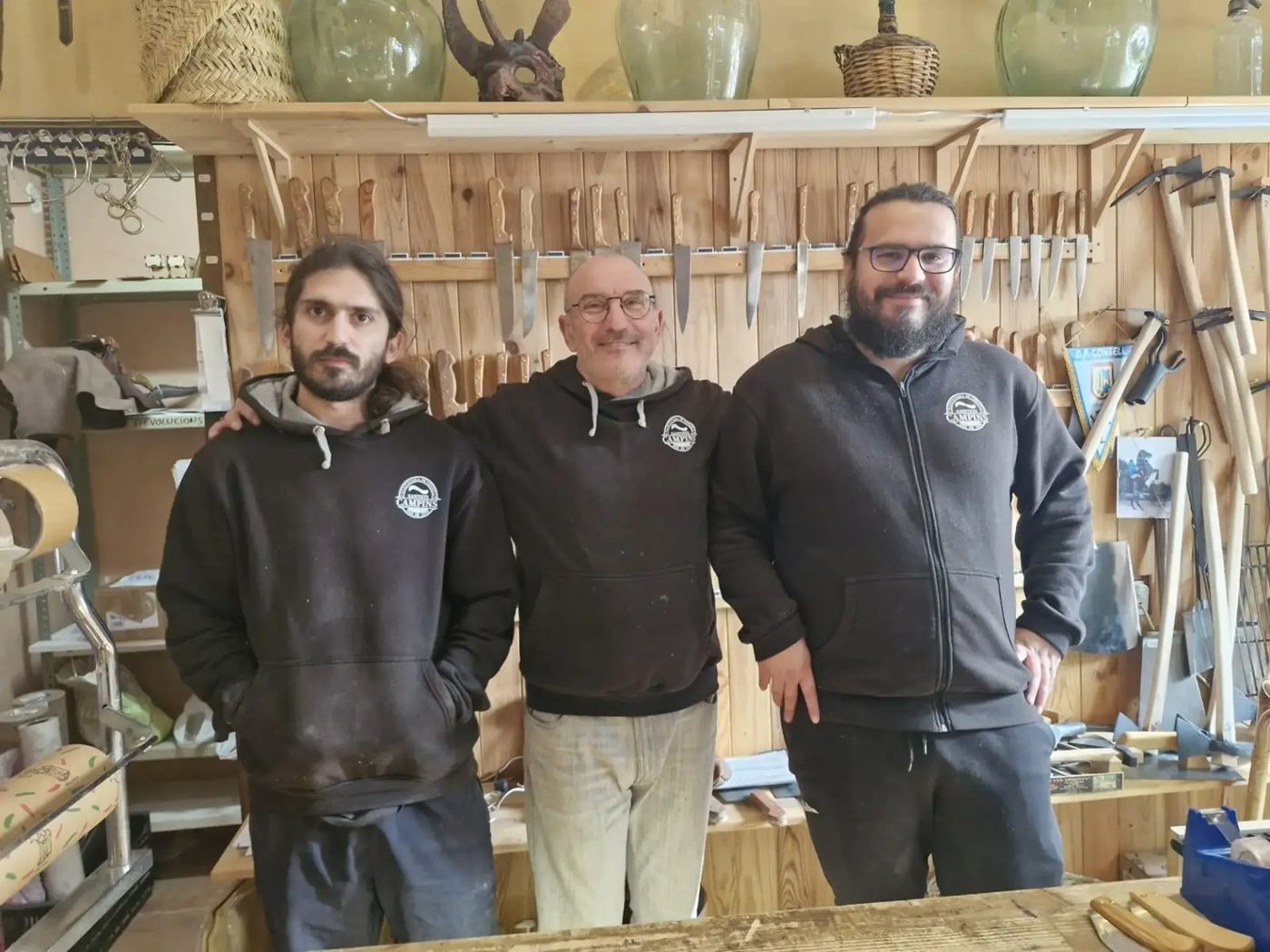
- Ganivets Campins — Consell (c/ d'Alcúdia 75). Father and son; handmade knives "in the Mallorcan way", with olive handles; commissions; also olive baskets and utensils. ganivets-campins
- A directory mentions antler handles in Campins; another, olive. Confirm during visit.
State
At risk: a single workshop identified.
Contemporary Updates
No verified cases.
Process step by step
1. Blade: cutting steel plate or forging from bar.
2. Roughing of the shape and edge.
3. Tempering: heat and cool suddenly (water or oil) to harden.
4. Tempering: reheat gently so that it is not brittle.
5. Handle: dried olive wood (or antler), cut into two handles.
6. Assembly with rivets (reblons) and sometimes ferrule.
7. Grinding and polishing. Handle oiling.
Forms and objects
- Ganivet de matances: to bleed, cut up and clean the pig (several sheets depending on the task).
- Ganivet pa / kitchen and pa amb oli.
- Ganivet d'empeltar: grafting fruit and olive trees (to verify local typology).
- Shepherd's or pocket navalla (to verify local production).
- Olive utensils from the same workshop: spoons, palettes, baskets.
Vocabulary
- ganiveter: knife maker.
- ganivet: knife.
- navalla: folding knife.
- fulla: leaf.
- tall: loin.
- mànec: mango.
- virolla: metal ring on the handle.
- rebló: rivet.
- temprar: temper.
- esmolar: sharpener.
- mola: sharpening wheel.
- matances: pig slaughter.
- empeltar: graft.
Geography
- Council (Raiguer): Ganivets Campins.
- Olive handle: material from the island itself (tramuntana and Raiguer olive groves).
- Steel is not local.
Xifres
- 1 identified workshop (Campins, Consell).
- Without production data or verified prices (please verify during visit).
Why is it design
- Tool per task: each blade responds to a gesture (bleed, cut bread, graft).
- Olive handle: dense, non-slip, holds grease and water.
- Long life cycle: sharpen, replace the handle.
For the project
- Possible piece: the "ganivet de matances" or pa amb oli as a design object; edition with a Mallorcan chef.
- Contact: Ganivets Campins (Consell).
- Background question: tool, ritual and form: the slaughter knife as an anonymous design.
Frequently asked questions
What is Ganiveteria (knife making)?
Knife for rural and kitchen use: steel blade and olive wood (or antler) handle. Forging or cutting the blade, tempering, sharpening and mounting the handle.
Who practises Ganiveteria (knife making) in Mallorca today?
The Balearic Islands Crafts Register lists 9 artisans linked to this craft, in Consell, Inca, Muro, Llucmajor, Palma.
What are the traditional words for Ganiveteria (knife making)?
Some words: empeltar, esmolar, fulla, ganivet, ganiveter, matances, mola, mànec.
Sources
Working text from the Disseny Indígena knowledge base, machine-translated from Spanish.