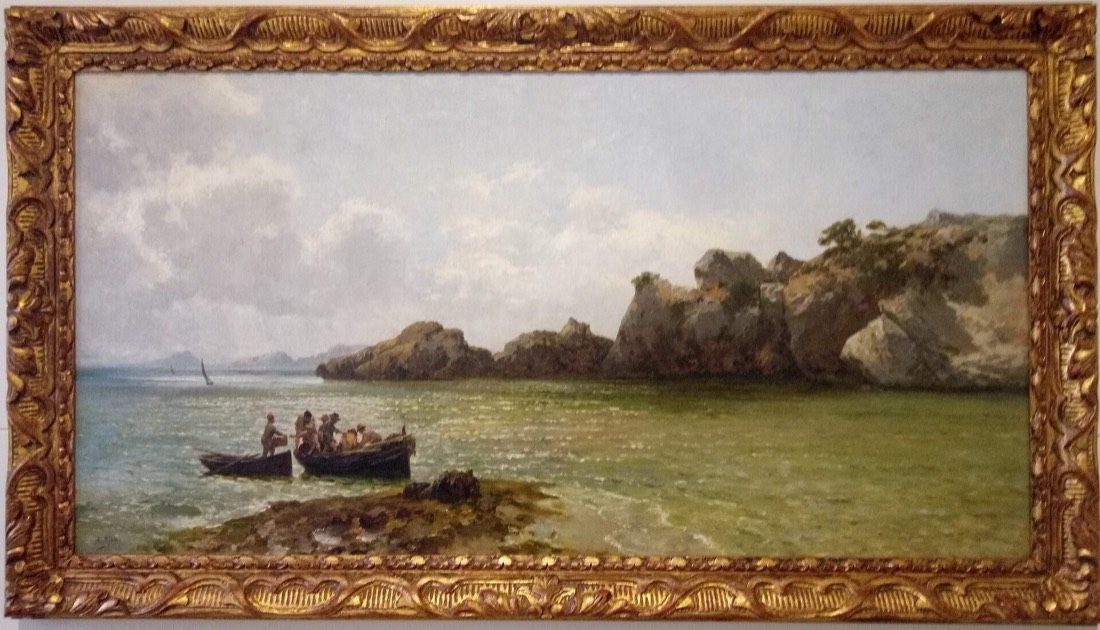
What it is and technique
The llatina sail (triangular, aerial) and the boats that use it: llaüt, bot, etc. The mestres d'aixa (riverside carpenters) build the hull out of wood (pine, juniper, olive for curved pieces) using templates and transmitted knowledge.
Short story
Used by Majorcan fishermen "since time immemorial"; trawlers were the last to use it for fishing. Today it lives in traditional and recreational navigation, very dispersed.
Chronology:
- 1249: first documentary record of a llaüt in Mallorca.
- Modern era: xabecs and coastal llaüts and travelers move trade.
- 20th century: the llaüt sail remains in the smaller fleet (llaüts, bots, some gussi); 40s-50s, regattas in the bay of Palma.
- 1915, 1924, 1925: the boats Rafael, Balear and Sant Isidre are built.
- 1926: the master d'aixa Antoni Ferrer builds the Mare Nostrum llaüt in Palma.
- Fleet inventories: 1990, 1994, 1996, 2001, 2010 (and another one underway in 2019).
- 1998: the Balearic Islands (Palma, 1924) is BIC. 2008: the llaüt Alzina (Cala Ratjada, 1945) is BIC.
- 2002: Friends of the Maritime Museum launch “La Nau” to save boats from scrapping.
- 2015: the Palma Boat Show awards the Escola de Mestres d'Aixa del Consell.
- 2020: Bernat Oliver Font, Els metres d'aixa de Mallorca.
- 2022: BIC Immaterial of the llatina sail.
- 2024: the Consell launches the Mare Nostrum as Bé Catalogat.
- May 2025: 1st Traditional Boat Festival in Portocolom (26 boats).
Where and who today
- Maritime Museum of Mallorca and Friends of the Maritime Museum (protection promoters). (organization file pending)
- Mestres d'aixa with name: see Xifres. Escola de Mestres d'Aixa del Consell (2015 Boat Show award; restored the Balearic and Alzina llaüts).
- Association of Traditional Boats (Portocolom) and Friends of the Maritime Museum (La Nau project).
State
BIC Immaterial de Mallorca: "La vela llatina i els oficis y coneixements relatables amb la seva pàctica" (initiation Dec. 2020; BOIB declaration no. 57, 04/30/2022). Includes mestres d'aixa and boats. Office of mestre d'aixa: at risk.
Process step by step
Traditional construction of a llaüt (summary):
1. Wood: it was cut in the mountains, on the appropriate moon, and dried for months.
2. Templates: the master draws shapes with inherited templates, not with plans.
3. Bower: keel, peu de roda, codasts and costelles (frames). The rods are fixed to the keel with counter rods.
4. Folre: hull planks nailed to the costelles.
5. Caulking: sealing joints with tow and pitch (caulking craft).
6. Cover, cossia, hatches, gunwale, maneguetes.
7. Rigging: the mestre d'aixa also makes arbres, antenes (car, pena, quimelca), botafores and small pieces (cassanells, clavilles, mustaches, bagpipes).
- Current variant: cold-moulding (thin glued sheets, without joints or caulking), used by Joan Màrius Rabassa.
- Today almost no new plants are built: the job focuses on restoring and maintaining (BOIB 2021).
Forms and objects
- Llaüt: the most numerous typology. From less than 1 to 50 t. No transom transom; two rodes; the bow crowned by the capellet (cap de mort). Fishing and cabotage.
- Bot: mirall stern (flat). Cobertat or descobertat.
- Llanxa felanitxera (bot felanitxer): bow launched, 20-25 pams; rowing and sailing; Portocolom area.
- Gussi: helmet similar to the llaüt, 22-23 pams; almost disappeared.
- Pastera (beta in the north): the most humble, flat, rowing; made with leftover wood.
- Bou boat: the only major preserved typology (Rafael, Balearic Islands, Sant Isidre).
- Rig: combinations of arbre mestre, triquet and mitjana, with floc.
Vocabulary
- mestre d'aixa: riverside carpenter.
- calafat: who seals hull joints.
- mestre veler: designs and cuts sails.
- mestre xarxer: rigging and maneuvering.
- quilla: dorsal spine of the hull.
- roda: curved piece of the bow (or stern).
- codast: stern piece attached to the keel.
- costella: rib.
- escalemot: extension of the frame on the deck.
- regala: plank that finishes the gunwale.
- capellet: finishing of the bow stem of the llaüt.
- cossia: central hole in the cover.
- antena: yard of the sail, formed by car (lower part) and penalty (upper part).
- quimelca: central reinforcement of the antenna.
- enginyes: ligatures that join car and penalty.
- botafora: stern bowsprit.
- pam: span, traditional measurement of length.
Geography
- Portocolom (Felanitx): largest preserved traditional fleet; Creus and Estelrich families (20th century); Master Cifre.
- Sóller, Pollença, Alcúdia: minor fleet preserved.
- Other workshops mentioned: Portocristo, Vilafranca, Can Pastilla, Palma, Andratx; families in Cala Rajada, Santanyí and Colònia de Sant Jordi.
- Traditional wood from the Majorcan mountains (species to be verified: pine, holm oak, olive and juniper are mentioned).
Xifres
- 2010 inventory: 782 boats, 733 types of flat sail. In 2019 there were already fewer.
- Association of Traditional Boats: 197 documented wooden boats (more than a third of the traditional ones that remain).
- Portocolom: at least 60 wooden boats without protected mooring (2026); mooring of €700 for 4-6 months.
- About 8 private master workshops (2019).
- Master sailers capable of cutting a plain sail: no more than half a dozen. Mestres xarxers: no more than two.
- La Nau: 25 boats saved (1934-1983) until 2021.
- Cala Gamba Llatina Sailing Day: more than 40 boats; 30th edition in 2026 (to be verified).
- Mestres d'aixa with names: Pep Florit (Consell), Pep Cabot (teacher at the Consell school), Cifre (Portocolom), Joan Màrius Rabassa (Can Pastilla; works mainly in Andratx), Miquel Clamor (Pollença, 3rd generation). Check if they are still active.
Why is it design
- Shape tested for centuries: the hull is the result of tests in the sea itself.
- Local and repairable material: wood from the island, replaceable parts.
- Design without plans: the template is the file; the master is memory.
- Versatile rig: the same system (arbre + antenna) is combined depending on the boat and use.
- See proximity design .
For the project
- Possible piece: the llaüt as a perfect design object (form-function-local material) in the exhibition; collaboration with a mestre d'aixa for a piece out of the sea (furniture, bench).
- Contact: Maritime Museum of Mallorca; Bernat Oliver Font (author of the technical report).
- Background question: popular engineering as design: who designed the llaüt?
Frequently asked questions
What is Vela llatina (lateen sail) and mestres d'aixa (shipwrights)?
The llatina sail (triangular, aerial) and the boats that use it: llaüt, bot, etc. The mestres d'aixa (riverside carpenters) build the hull out of wood (pine…
Who practises Vela llatina (lateen sail) and mestres d'aixa (shipwrights) in Mallorca today?
The Balearic Islands Crafts Register lists 18 artisans linked to this craft, in Felanitx, Palma, Campos, Sineu, Vilafranca De Bonany.
What are the traditional words for Vela llatina (lateen sail) and mestres d'aixa (shipwrights)?
Some words: antena, botafora, calafat, capellet, codast, cossia, costella, enginyes.
Sources
- intranet.caib.es/eboibfront/pdf/ca/2021/52/1085809
- caib.es/sites/departamentdecultura/ca/bicim-illes_balears/
- mallorcadiario.com/museo-maritimo-mallorca-celebra-declaracion-vela-latina-como-
- caib.es/sites/departamentdecultura/ca/programa_0_0_0_0/
- caib.es/eboibfront/pdf/ca/2021/52/1085809
- intranet.caib.es/eboibfront/pdf/ca/2024/113/1169804
- arabalears.cat/societat/mestres-ofici-antic-encara-perdura_1_2557226.html
- dbalears.cat/balears/cultura/2010/07/18/238687/ma-de-mestre-d-aixa.html
- mallorcadiario.com/el-salon-nautico-de-palma-premia-a-la-escola-de-mestres-daixa
- interregeurope.eu/good-practices/la-nau-project-safeguard-of-traditional-vessels
- mallorca.com/ca/revista/mallorca-noticias/portocolom-barques-fusta
- vinetur.com/2025062188979/portocolom-en-mallorca-revive-su-memoria-vinicola-y-ma
- forbes.es/en/balearic/1018669/more-than-40-boats-in-a-historic-edition-of-the-di
- masmallorca.es/en/local-produce/the-llaut-cultural-heritage.html
- casadellibro.com.co/libro-els-mestres-d-aixa-de-mallorca/9788417113988/11823631
Working text from the Disseny Indígena knowledge base, machine-translated from Spanish.