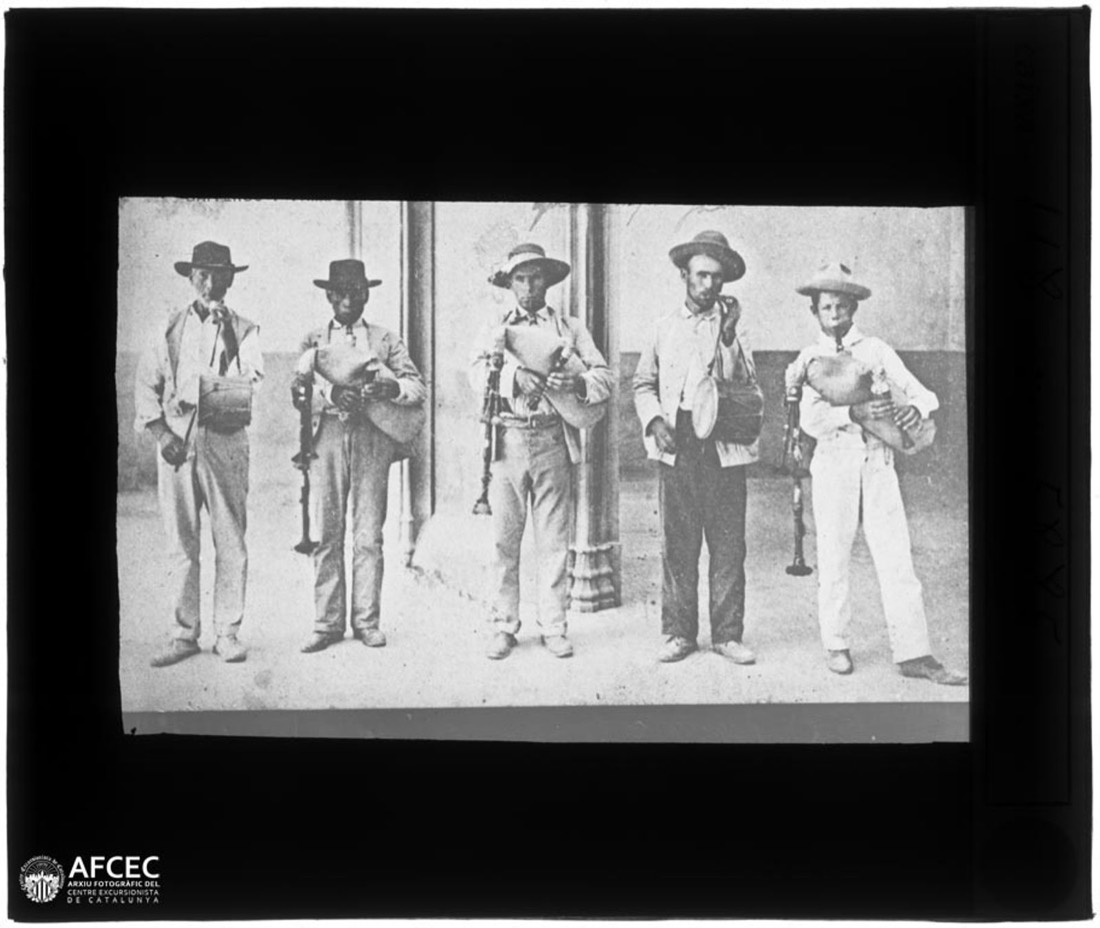
What it is and technique
- Xeremies: Majorcan bagpipe. Wineskin (leather or synthetic), grall (pointer) and usually three staffs. The xeremiers play in pairs with the flabioler, who plays the flabiol (flute with one hand) and the drumí with the other.
- Guitar: classical and flamenco construction by hand; also signature electric guitar.
Short story
The xeremies accompany festivals and popular dances (cossiers, ball de bot). The guitar in Mallorca has more of a concert tradition than a construction tradition; a UIB job gathers the island's electric guitar builders.
Chronology:
- 1343: a document cites Joan Mascum, a bagpipe minstrel from Mallorca.
- 1353: Majorcan ministers play at the court of Pedro IV in Tortosa.
- 16th century: xeremia takes a shape similar to the current one (bords above); 19th century, new settings.
- Francoism: the instrument comes out of many parties.
- 1974: first colles trobado in Montuïri (Antoni Artigues and OCB); about 20 colles, the few that remained.
- 1975: the Calatrava group is born (Palma).
-c . 1980: Bartomeu Frau (Sóller) begins to build xeremies; documentary by producer Wilma with him at the wheel.
- 1982: Toni Artigues, Xeremiers. Manual of xeremies, flabiol and drumí. 1989: Artigues and Joan Morey, work on repertoire and construction.
- 1994: first Trobada de Xeremiers i Fira de Lutiers de Sa Pobla (end of November).
- 2000s: Rafel Moll (Sa Pobla) begins to build due to the demand of music schools.
- 2005: discovery of Sóller schools.
Where and who today
- Trobada de Xeremiers i Fira de Lutiers de Sa Pobla (November): meeting point for groups and builders. trobada-xeremiers-fira-lutiers-sa-pobla
- Guillem Horrach: cited as one of the last luthiers of traditional instruments; about 100 flabiols a year; He has recorded his knowledge on video so that it is not lost. guillem-horrach-flabiols
- Morales Guitars — Palma (Antonio Morales; trained with George Bowden; Palma gold medal, 2016). guitarras-morales
- Xeremies builders with names: Rafel Moll (Sa Pobla; xeremies and flabiols since the 2000s; he learned from a neighboring turner) and Joan Marroig «Piu» (Sóller). See Xifres.
State
I live thanks to the rise of the colles de xeremiers; Few and older builders.
Contemporary Updates
Earring.
Process step by step
Xeremia (summary):
1. Wood: it is cut and dried for a long time. Tradition: cut on the appropriate February moon (to verify species; local hardwoods are mentioned).
2. Turning the grall (pointer) and the staves on the lathe.
3. Interior perforation: conical in the grall, cylindrical in snare drums (to verify).
4. Grall holes, calibrated for tuning.
5. Canyetes: double reed reed for the grall (oboe type); reed reeds for the staffs.
6. Sac (skin) of leather or synthetic material; puffer to blow; braguer, a piece that distributes the air to the snare drums.
7. Assembly and tuning with the colla flabiol.
- Before, the lack of builders forced the xeremiers to make their instruments. Today the trade is more professional and the tuning has improved.
Forms and objects
- Xeremies: sac + bufador + grall + usually three bass drums (the roncó gives the tone; the others are often false, decorative).
- Flabiol: one-handed flute.
- Tamborí: small drum played by the flabioler himself.
- Ximbomba: friction drum of the winter festivities (verify builders).
- Guitarró and ball de bot guitar (per verify local typology).
- Signature classical and flamenco guitar (Morales, Palma).
Vocabulary
- xeremier: who plays the xeremies.
- flabioler: someone who plays flabiol and drumí.
- colla: pair or group of xeremier and flabioler.
- sac / sarró: wineskin.
- bufador: blowing tube.
- grall: melodic pointer.
- bordons: fixed note tubes.
- roncó: main staff.
- braguer: piece that distributes air to the staves.
- canyeta: reed tongue.
- tamborí: tambourine.
- ximbomba: zambomba.
- lutier: instrument maker.
- mateixa: traditional Majorcan dance.
Geography
- Sa Pobla: Trobada and Fira de Lutiers; Rafel Moll workshop.
- Sóller: Xeremiers de Sóller; workshops by Joan Marroig «Piu» (xeremies) and Tomeu Amengual (percussion); work that has reached Catalonia and museums in the Czech Republic and Ourense.
- Raw material: hardwoods and local cane; animal or synthetic skin.
Xifres
- Average price of some xeremies: about €1,000 (Rafel Moll, Ara Balears).
- Makers of traditional instruments: Moll is among 4 in Mallorca.
- Guillem Horrach: about 100 flabiols in a year.
- Named builders: Rafel Moll (Sa Pobla), Joan Marroig Samper «Piu» (Sóller), Bartomeu Frau (Sóller, since c. 1980), Tomeu Amengual (Sóller, percussion), Guillem Horrach (flabiols). Check who is still active.
Why is it design
- Instrument-system: each piece (grall, staffs, sac) is interchangeable and repairable.
- Shared tuning: xeremia and flabiol are designed to sound together.
- Social purpose: it exists to make a party sound; It goes from master to student.
For the project
- Possible piece: document in the atlas the construction of a xeremia from start to finish (local materials: wood, cane, leather); concert-workshop at the exhibition.
- Contact: Guillem Horrach; organization of the Lutiers Fair (Sa Pobla City Council); Antonio Morales.
- Background question: the instrument as a design object that exists to make a community sound.
Frequently asked questions
What is Traditional instruments and luthiers (xeremies, flabiols, guitars)?
- Xeremies: Majorcan bagpipe. Wineskin (leather or synthetic), grall (pointer) and usually three staffs. The xeremiers play in pairs with the flabioler, who…
Who practises Traditional instruments and luthiers (xeremies, flabiols, guitars) in Mallorca today?
The Balearic Islands Crafts Register lists 12 artisans linked to this craft, in Palma, Llucmajor, Alcúdia, Algaida, Andratx.
What are the traditional words for Traditional instruments and luthiers (xeremies, flabiols, guitars)?
Some words: bordons, braguer, bufador, canyeta, colla, flabioler, grall, lutier.
Sources
- wikipedia.com/wiki/Xeremia
- enciclopedia.cat/EC-GEM-264
- mallorcaglobalmag.es/?p=101591
- majorcadailybulletin.com/enjoying-mallorca/whatson/fiestas-fairs/sound-the-bagpi
- seemallorca.com/crafts
- mallorca.com/ca/directori/empresa/guitarras-morales-palma-ce2sxvbs
- guitar-list.com/brands/antonio-morales
- repositori.uib.es/xmlui/handle/11201/159088?show=full
- arabalears.cat/societat/xeremiers-renascuda-anima-festiva-mallorca_130_5251523.h
- xeremiersdesoller.com/wp-content/uploads/2024/03/Jornades-xeremiers.pdf
- en.wikipedia.org/wiki/Xeremia
- dbalears.cat/opinio/opinio/2010/11/17/244215/xeremies-i-xeremiers.html
- cartasonorademallorca.com/listing/entrevista-a-miquel-aloy-a-llargo-xeremiers-de
Working text from the Disseny Indígena knowledge base, machine-translated from Spanish.