What is
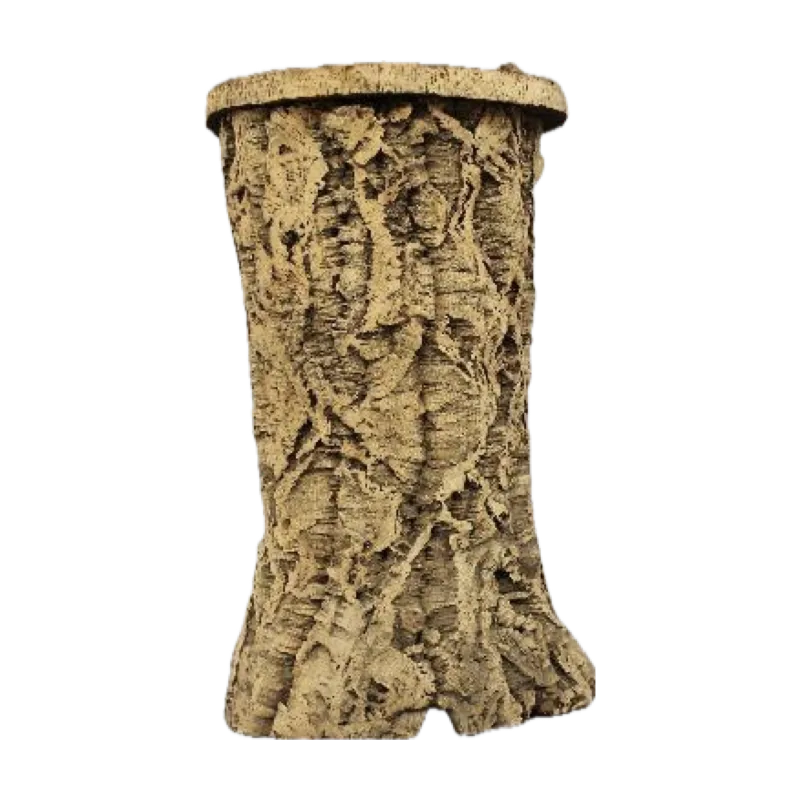
The traditional Mallorcan beehive. It is said homemade, caera or caiera (DCVB, Mall.). In Catalonia it is said arna or rusc; In Mallorca arna is above all the moth, also the one that eats the landlady's honeycombs.
How is
- Cylinder (or smooth cone trunk) of canya esquerdes (strips of split cane).
- About six spans long by one span in diameter (≈ 1.2 m × 0.2 m).
- The strips are glued with a mixture of clay, straw dust and ox dung.
- At each end, a marès lid: the fonell (DCVB, Mall.).
How is fa
- The reed is woven or tied into a tube and smeared with the mixture.
- They cover their mouths with two slabs of marès.
- They are placed lying down in rows: the banc d'abelles (set of hives).
Com s'usa
- The bees build the bresca (comb) inside. According to her address, the landlady has a name:
- homemade redona: honeycombs parallel to the fonells (on a disk);
- homemade llarguera: honeycombs lengthwise;
- homemade bescuncera: diagonal combs (DCVB).
- Full homemade: bees and honeycombs from fonell to fonell.
- He is castrated by removing a fonell (procedure, to be verified).
- Mallorcan swarm rule: if a swarm is more than 80 steps from a house or bank, it belongs to whoever finds it; If it is closer, it is from the owner of the bank (Alcover, Rondaies II, DCVB).
Vocabulary
- homemade / caera / caiera — colmena (Mall.).
- fonell — marès cover.
- banc d'abelles — apiary.
- bresca — honeycomb; bresca rodona, llarguera, bescunsera (Manacor, Llucmajor), travessera (Artà).
- bresca abegotera — of drones; bresca de sac — without honey (Manacor); walled bresca — sealed with wax (Mall.).
- eixam — swarm. «Eixam de maig, jo me'n vaig» — the May one no longer stays (Mall.).
- homemade (Mall.) - also the protector of reeds around a young tree: "unes cayeres enllistonades... en ets abras de la Rambla" (Ignor., DCVB).
History
- 13th century: Llull speaks of “un buc de abelles, qui era ple de bresques” (Fèlix, DCVB).
- Early 20th century: Alcover and the DCVB describe the homemade cane with marès fonells.
- Today: beekeepers recover the black abella of Mallorca (Dotze Reines project and others; please check details). The cane house is no longer used (so check if any remain).
On veure'n
- Remains in the Son Maixella area (between Valldemossa, Esporles, Palma and Bunyola), studied by the UIB (to verify if they are made of canya or stone).
- Museum of Mallorca, ethnological section (Wall) (to be verified).
Why is it design
- Field waste hive: cane, mud, straw and dung.
- Two identical doors: the cylinder opens at both ends.
- A form that organizes the bees: the honeycomb takes its name according to the landlady.
- Rule of 80 steps: a proprietary design about something that flies.
For the project
- Reconstruct a farmhouse with cane and marès: exhibition and workshop piece.
- Collaborate with black abella beekeepers.
Frequently asked questions
What is Casera d'abelles (traditional beehive)?
The traditional Mallorcan beehive. It is said homemade, caera or caiera (DCVB, Mall.). In Catalonia it is said arna or rusc; In Mallorca arna is above all…
Who practises Casera d'abelles (traditional beehive) in Mallorca today?
The Balearic Islands Crafts Register lists 10 artisans linked to this craft, in Llucmajor, Sóller, Felanitx, Llubí, Palma.
What are the traditional words for Casera d'abelles (traditional beehive)?
Some words: banc d'abelles, bresca, bresca abegotera, casera / caera / caiera, eixam, fonell.
Sources
- dcvb.iec.cat/results.asp?Word=casera
- dcvb.iec.cat/results.asp?Word=bresca
- dcvb.iec.cat/results.asp?Word=eixam
- dcvb.iec.cat/results.asp?Word=arna
Working text from the Disseny Indígena knowledge base, machine-translated from Spanish.