What is
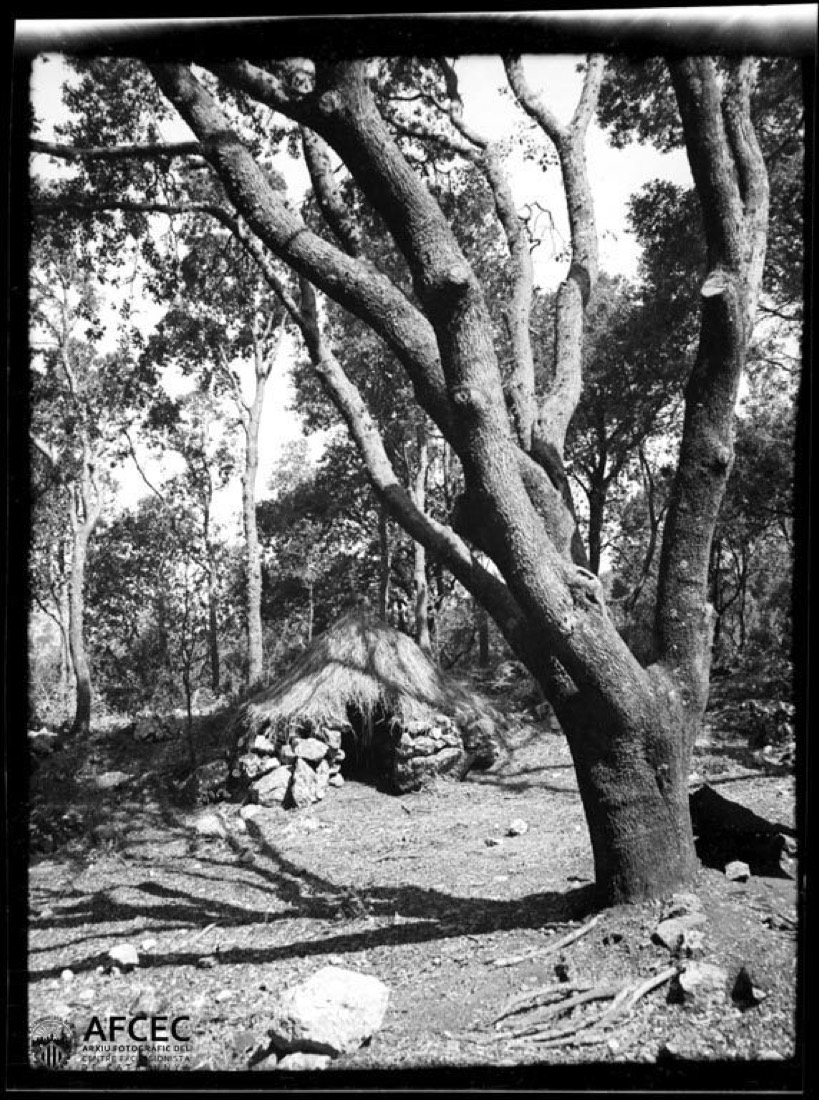
The traces of charcoaling: converting forest firewood into charcoal. The sitja is the circular platform where the wood oven was mounted. The barraca is the stone cabin where the charcoal burners lived during the campaign.
##Com works
- Contract: charcoal burner and owner of the land agreed on which trees to cut and where to make sitja and barracks.
- First barracks: circular floor plan, dry stone walls, conical roof with wooden frame and càrritx.
- Sitja: a cobbled circle is delimited; On top, small stones, dry and red earth, and pine or oak firewood in a conical shape. It is covered with green branches and a layer of fine soil (Consorci).
- Slow cooking without flame: the fire burns little oxygen and the wood chars instead of burning. You have to watch day and night.
- Campaign: spring and summer.
Elements and vocabulary
- sitja (DCVB, Mall.): charcoal oven, pile of firewood ready to cook and make charcoal
- rotlo (cobbled circle of the sitja), ull (opening of the fire; to be verified), ranxo (colla food; to be verified), barraca, carbó, carboner, colla
- Key terms of the TFG UIB El parlar dels carboners: sitja, rotlo, ull, ranxo, barraca, carbó
History
- One of the most important economic activities in the Serra (Consorci).
- The Calvià catalogs date these sets between the 16th century. 18th and early 20th centuries.
- End: butane gas and electricity in the mid-19th century. XX (to verify date).
- Reference work cited by the catalogues: Valero Martí, Sitges i carboners (1989; to verify complete author).
On veure'n
- Any holm oak forest in the Serra: the cobblestone signs are seen next to the roads.
- Parc Etnològic de Caimari: shack and sitja reconstructed (to verify exact content).
- GR 221 itineraries and public estates (Son Moragues, Tossals Verds...).
Stat
Thousands of rotlos in the forest, without individual protection. The barracks fall down without use. Oral report collected by the UIB (13 interviews with coal workers, 2018).
Why is it design
The forest as a temporary factory: minimal, removable architecture, at the resource site. The barrack is a removable shelter with what the mountain offers. Lesson: build for a station and leave the place almost the same. It is proximity design .
Avui architecture
No reinterpretation identified. Open topic: ephemeral and campaign architecture.
For the project
- Audio/interview: use the TFG UIB as a script to recover the speech of the chickadees.
- Atlas: map of rotlos on a public property + drawing of the sitja in layers.
- Occupation (sister file): carboners i sitges .
- Related trade: pedra en sec .
Frequently asked questions
What is Sitges and charcoal burners' huts?
The traces of charcoaling: converting forest firewood into charcoal. The sitja is the circular platform where the wood oven was mounted. The barraca is the…
Sources
- serradetramuntana.net/-/barraques-i-sitges
- dcvb.iec.cat/results.asp?word=sitja
- dspace.uib.es/xmlui/handle/11201/149630?show=full
- calvia.com/es/contenido-ayuntamiento/resolveuid/b607784b929148979a48d55ac7df3f48
- ddd.uab.cat/pub/worpap/2014/115814/basgespaisertra_a2014p246-322.pdf
Working text from the Disseny Indígena knowledge base, machine-translated from Spanish.